
Bone health in older adults in Malaysia matters most before anything hurts. Most families only talk about it after a fall. Calcium, vitamin D, and movement are what actually help now.
Summary
- Bones lose density from your mid-30s; the process speeds up sharply for women once their periods stop.
- Calcium and vitamin D work together — calcium builds bone, D3 helps absorb it, K2 directs it where needed.
- Falls are not random: muscle weakness, poor balance, medications, and home hazards are all addressable.
- If mum or dad is on long-term medication, ask the pharmacist to review it for balance or bone effects.
Why bones matter more after 60
Everyone’s bones lose density from their mid-30s, faster in women once their periods stop. By the time someone is in their 60s, a small slip can become a fracture instead of a bruise. A broken hip can mean surgery, months of recovery, and a lasting change in mobility.
Preventing a fall is much easier than recovering from one. (NHS overview on osteoporosis for a plain summary of the risk factors.)
What actually helps: calcium, D3, K2 and movement
Calcium: the building block
Calcium is the main mineral in bone. The body cannot make it — it comes from food or a supplement.
Good food sources:
- dairy (milk, yoghurt, cheese)
- tofu made with calcium sulphate
- canned sardines or salmon with the small bones
- leafy greens like kangkung and kailan
The catch: the body can only absorb so much calcium at once. Split doses work better than one large dose. If mum or dad takes calcium, check whether they spread it through the day.
How much: general guidance for adults over 50 is around 1,000–1,200 mg of calcium daily, from food and supplement combined. Most Malaysians get some from food. A supplement fills the rest, and the pharmacist can help work out how much is actually needed.
Vitamin D3: the gatekeeper
Calcium without vitamin D3 is much less useful. Vitamin D is what allows the gut to absorb calcium from food into the bloodstream. Without enough D, most of the calcium in what you eat passes straight through.
Low vitamin D is common in Malaysia even with year-round sunshine. Most people spend the hottest hours indoors — the July vitamin C and D post covers this in full. For older adults, skin also becomes less efficient at producing vitamin D from sunlight with age.
Signs that vitamin D might be low:
- muscle weakness
- bone aches without an obvious cause
- fatigue that does not improve with rest
None of these is a diagnosis. They’re reasons to ask the pharmacist whether a supplement makes sense.
Food sources: egg yolk, oily fish (salmon, sardines), fortified milk or cereal. Vitamin D from food alone rarely brings levels up — a supplement is more reliable if you’re running low.
K2: the director
Vitamin K2 is the less-discussed part of the bone equation. It helps direct calcium into bone rather than letting it settle in soft tissue and blood vessels. Some calcium supplements now combine all three — calcium, D3, and K2 — in one tablet.
The evidence for K2’s added benefit is still growing, and the pharmacist can explain where things currently stand.
Movement: the part food and supplements cannot replace
Exercise does something no supplement can: it gives the skeleton a reason to stay dense. When muscles work, they pull on bone — and bone responds by staying stronger.
Low-impact options that work:
- walking — even 20–30 minutes most days counts
- climbing stairs
- light resistance exercises using body weight or a resistance band
- tai chi — one of the most studied balance exercises for reducing fall risk; many community centres run classes
Swimming and cycling are good for the heart, but they don’t load bones the same way — mix them in, not as the only activity.
Falls are not random — the addressable factors
Most falls in older adults have at least one of these contributing factors — and most of them can be reduced:
Medication side effects. Some medicines cause dizziness, drop blood pressure when standing, or slow reaction times. Common ones to check:
- blood pressure medicines
- sedatives and sleep aids
- antidepressants and antihistamines
A pharmacist medication review can flag what is affecting their steadiness. Bring the medicine bag when you come in.
Muscle weakness. Muscle mass declines with age — just like bone, but more visible in everyday movement. Weak leg muscles mean poor balance. Simple exercises help a lot over a few months:
- chair squats
- standing on one foot while holding the sink
- stepping up and down a low step
Home hazards. Most falls happen at home. Common spots:
- bathroom — wet floor, getting in and out of the bath
- kitchen — reaching too high
- hallway — poor visibility at night
- eyes — an outdated glasses prescription is an underappreciated fall risk
Simple fixes: a rubber mat in the shower, a grab rail near the toilet, a nightlight in the hallway. None of these is expensive — but they tend to get done after a fall rather than before.
When to bring mum or dad in
A walk-in chat with the pharmacist is a good first step if:
- Checking supplements. You want to know if their calcium and vitamin D make sense for their age and diet.
- Reviewing medicines. They take several long-term medicines and you want to know if any affect their balance.
- A product they saw advertised. You’re not sure if a bone supplement is worth adding to what they take.
- After a fall. They’ve had a recent fall and want to talk through what might have contributed.
No appointment needed — walk in any time. If they’re on long-term medication, bring the medicine bag or a photo of the bottles.
📍 Essen Pharmacy · 3, Jalan Kuning 2, Taman Pelangi, Johor Bahru · Mon–Sat 9am–8pm · Sun 9am–6pm · 012-788 4057 · 2-minute walk from Plaza Pelangi.
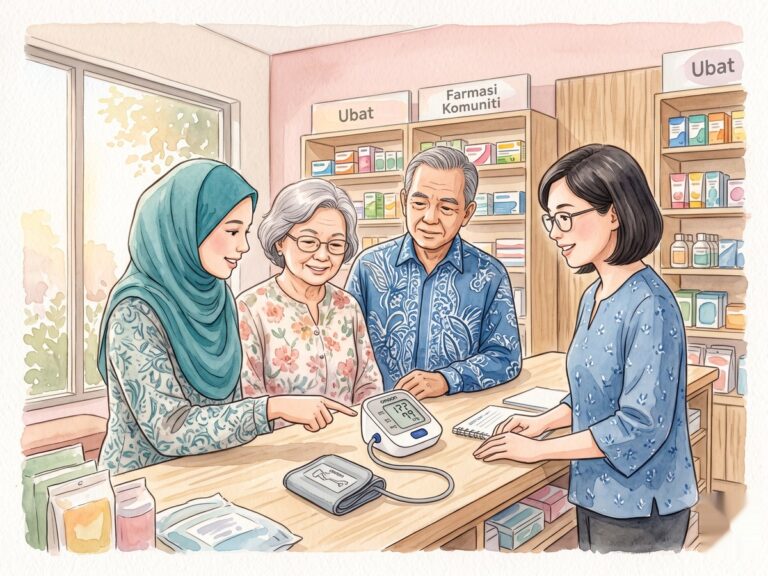
If you’re bringing both parents in, a free blood pressure check is available too — no appointment, nothing to buy. Worth adding while you’re there, especially if either is on blood pressure medicine. See this month’s Parent’s Day post for what a 15-minute walk-in check covers.
Important note. This post is general health education, not a medical diagnosis. Bone loss is diagnosed by a doctor, usually with a bone density scan called a DEXA scan. If you’re concerned about a parent’s fall risk or bone health, the right next step after a pharmacy chat is a doctor’s referral. Walk-in checks at Essen are a starting point — not a replacement for your doctor’s care.
FAQ
How do I know if mum or dad’s bones are getting weaker?
There’s no way to know from symptoms alone — bone loss doesn’t hurt until something breaks. The reliable way is a DEXA scan, which a doctor can refer for. A pharmacist can also check their calcium and vitamin D intake, and flag any medicines that affect bone density.
Can calcium supplements cause harm if taken long-term?
Calcium supplements are safe for most older adults, in amounts that match what the body needs. The caution is high single doses — large spikes may be harder on the heart than steady intake. Spread doses through the day, aim for 1,000–1,200 mg daily, and ask the pharmacist to confirm your range.
My parent refuses to exercise. What else can be done?
Even small increases in movement help — walking to the letter box, a few chair squats while the kettle boils. Making the home safer (bathroom mat, grab rail, nightlight) matters just as much while the habit builds. If there’s a practical barrier like knee pain or breathlessness, the pharmacist or doctor can suggest what fits.
My mother stopped her periods several years ago. Should she be on a bone supplement now?
Women lose bone density fastest in the first few years after their periods stop. Whether a supplement helps depends on her calcium from food, her vitamin D levels, and other risk factors. This is worth discussing with the pharmacist directly.