Vitamin C and D immune support in Johor Bahru starts with knowing what each one does — “boosts immunity” oversells it. Here’s what each vitamin does, why many Malaysians run low on D, and when a supplement is worth it.
Summary
- Vitamin C helps your immune cells work faster once an infection starts; it does not stop you getting sick, but may shorten how long it lasts.
- Vitamin D helps your immune system identify threats in the first place; many Malaysians run low despite year-round sunshine.
- Food first: citrus, guava, papaya for C; eggs and oily fish for D — but food rarely gives enough D for consistent levels.
- When a supplement helps: confirmed low levels, mostly indoors all day, or catching every bug despite eating well.
What vitamin C actually does (and does not do)
Vitamin C helps the immune cells that fight an existing infection. It does not stop colds from arriving, but it may shorten how long one lasts. Most people reach for it once a sore throat starts — earlier than it helps, but not the wrong instinct.
There is reasonable evidence that regular vitamin C shortens cold duration by roughly half a day on average. (NHS overview of vitamin C for a plain summary of what we know.)
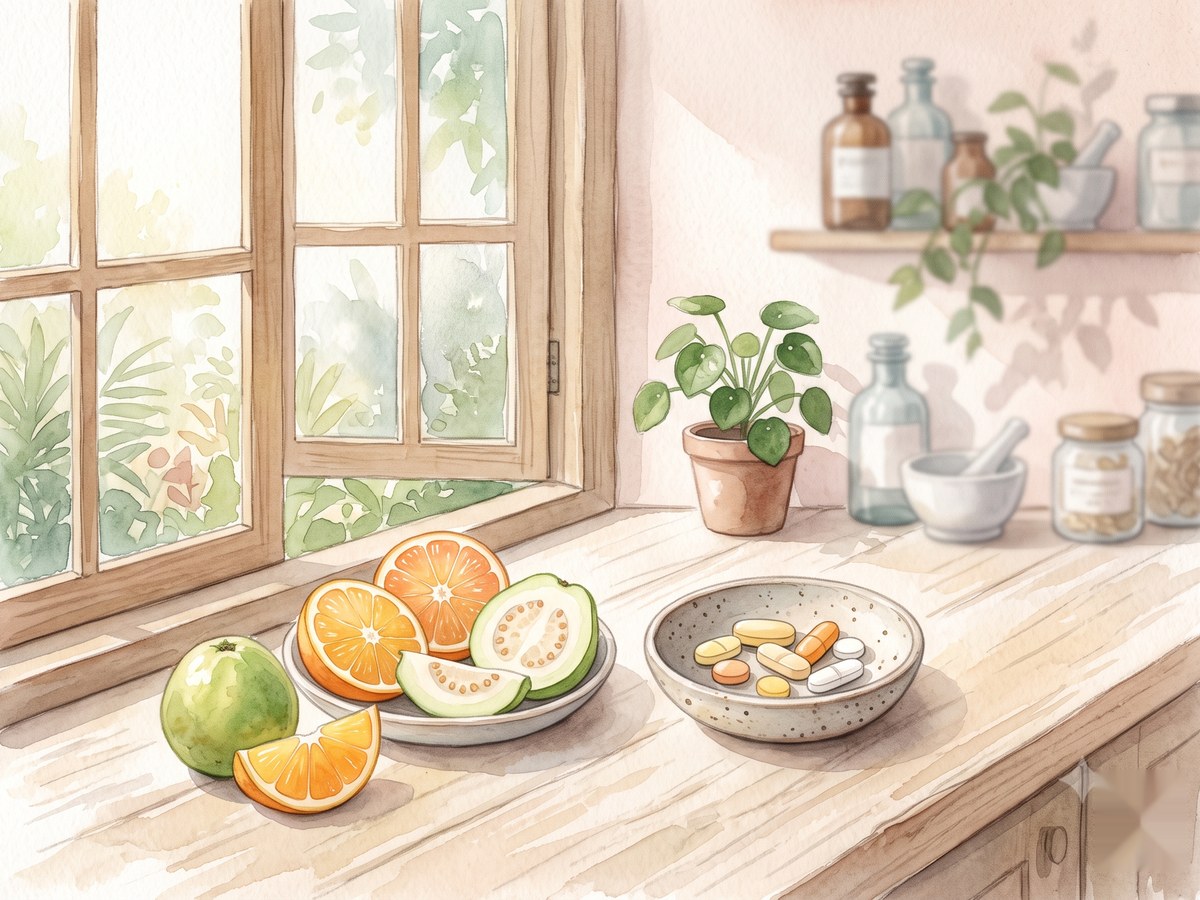
Good food sources: guava, papaya, starfruit, citrus, tomatoes, and most leafy vegetables. Eating a reasonable amount of fruit and vegetables daily is usually enough on its own. A supplement just fills the gaps — handy during a busy week of grab-and-go meals.
One thing to watch for: vitamin C above 1,000 mg a day can cause stomach discomfort or loose stools. This doesn’t affect everyone. The pharmacist can help pick a form and dose that fits your routine.
Why many Malaysians run low on vitamin D (even with year-round sunshine)
Vitamin D deficiency is surprisingly common in Malaysia despite year-round sunshine. Most Malaysians spend the hottest hours indoors, and the sun is often too low by the time they commute. Darker skin tones also produce D more slowly. (WHO overview on vitamin D has the global picture.)
Vitamin D’s role is different from vitamin C. Rather than fighting an existing infection, it helps the immune system recognise threats in the first place. Low vitamin D does not cause colds, but low levels can make the immune response slower and less targeted.
Signs that vitamin D might be low:
- Getting sick often. More than the people around you.
- Fatigue that lingers. Doesn’t improve even with enough sleep.
- Unexplained aches. Bone or muscle pain with no obvious cause.
None of these is a diagnosis. They are reasons to ask the pharmacist whether a blood test is worth getting.
Food sources: eggs (mostly the yolk), oily fish like salmon or sardines, and some fortified milks or cereals. Vitamin D from food alone rarely brings levels up consistently. If you’re running low, a supplement is usually the more reliable fix.
Vitamin C and D: food first, supplement second
Before picking up a bottle, the basics matter more:
- Eat some fruit every day. One guava gives you more vitamin C than most supplements — papaya, starfruit, and citrus all count.
- Get some morning sun. 10 to 15 minutes of morning sun on your arms, a few times a week, helps vitamin D production.
- Do not skip meals. An immune system running on kopitiam kopi and no breakfast is not a well-supported one.
When a supplement is genuinely worth it: – A blood test confirmed it. You’ve had a test showing low vitamin D. – You’re indoors all day. You rarely get morning sun during your working hours. – You keep getting sick. You catch whatever’s going around despite eating reasonably well. – Buying for an older parent. One who doesn’t eat much variety.
Vitamin C and D come in many forms — effervescent tablets, chewables, capsules, drops for kids. The right form depends on your routine, your stomach, and who it’s for. An older parent who struggles with tablets often does better with a chewable — the pharmacist can help.
What to do next
Not sure whether vitamin C or D makes sense for your family? Walk in and tell the pharmacist what you’ve noticed — catching every bug, low energy — no booking needed. They’ll give you a straight answer, no pushy sales.
📍 Essen Pharmacy · 3, Jalan Kuning 2, Taman Pelangi, Johor Bahru · Mon–Sat 9am–8pm · Sun 9am–6pm · 012-788 4057
Important note. This post is general health education from a community pharmacy. It is not a medical diagnosis or a replacement for your doctor’s advice. If you have ongoing concerns about your immunity, energy levels, or general health, speak to your doctor — especially before starting high-dose supplements alongside existing medication.
FAQ
Does vitamin C really prevent colds?
Vitamin C does not stop colds from arriving. Taking it regularly may shorten how long a cold lasts, by roughly half a day on average. It works best once your body is already fighting an infection, not as a barrier beforehand.
Why am I low in vitamin D even though Malaysia has sunshine all year?
Most Malaysians spend the hottest part of the day indoors. Many also commute early morning or evening, when the sun is too weak to trigger vitamin D production. Darker skin tones make less of it too, so low vitamin D ends up common here despite the climate.
Is it safe to take vitamin C and vitamin D together?
Yes — they work on different parts of the immune system, so taking them together is straightforward. The pharmacist can help you pick a combined supplement or separate ones. They’ll also check what you’re already taking, so there are no overlaps.
How do I know what dose of vitamin D to take?
The most reliable answer comes from a blood test that checks your actual levels. Without that, a general maintenance dose of 1,000–2,000 IU a day is commonly used for adults in Southeast Asia. Walk in and ask the pharmacist, who will suggest a form and dose that fits your routine.
My older parent is already on medication. Is it safe for them to take these vitamins?
In most cases, yes. But vitamin D at higher doses can affect how some medications work, so it’s worth checking. Bring their medicine bag when you come in — the pharmacist will check what they’re already taking first.